Solar panel cleaning, checks and repairs in Marbella

A solar system has no moving parts, which is why faults go unnoticed for months. A yearly visit keeps the output where it should be and finds the small problems early.

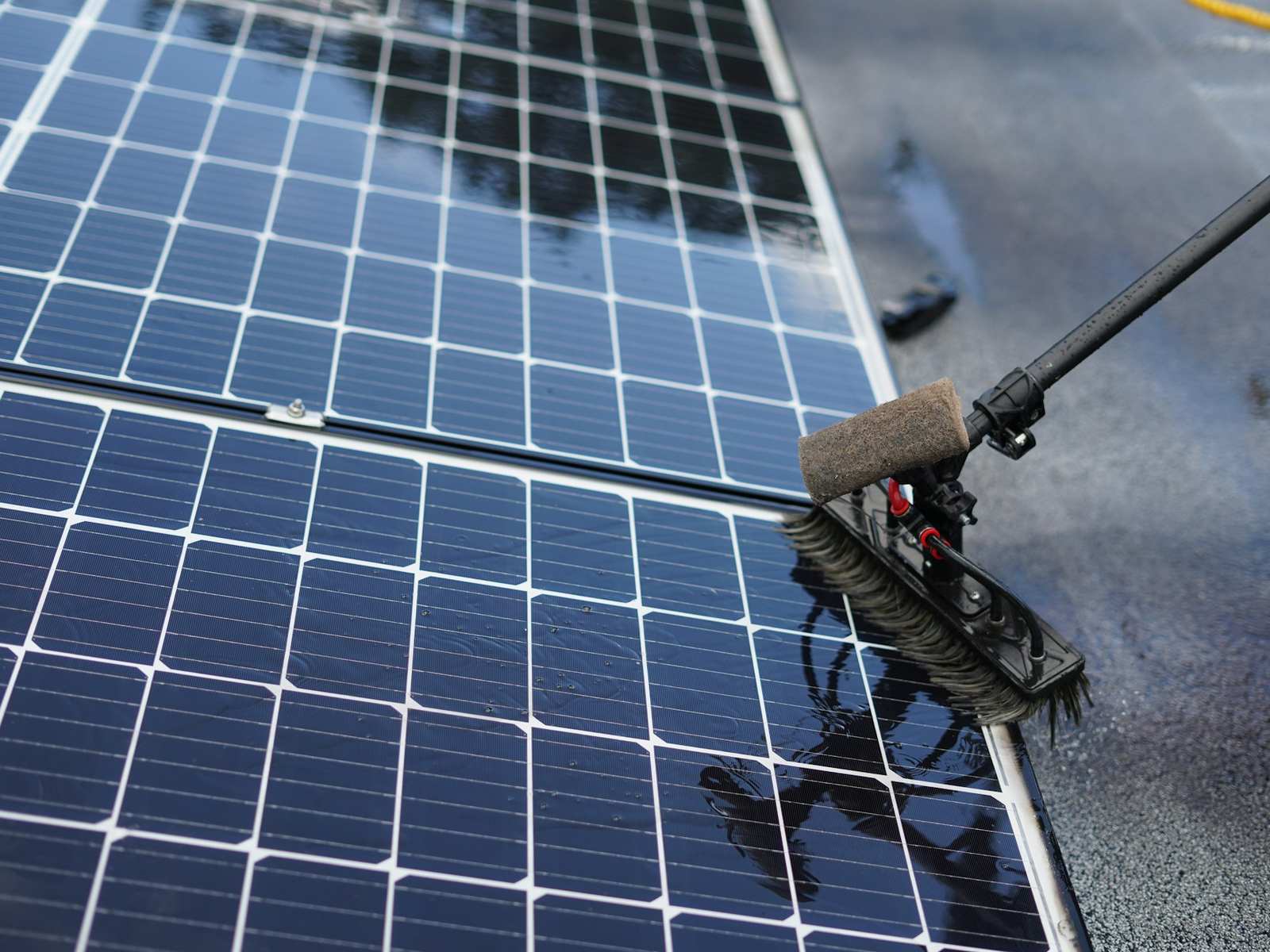
A soft brush on a long pole washing a row of solar panels

What dirt costs on this coast

Marbella can go three months or more in summer without real rain. In that time a film of dust, salt and pollen builds on the glass, and several times a year a southerly wind brings Saharan dust, the calima, that turns cars and terraces orange overnight. Air from North Africa reaches the south of Spain on dozens of days a year, mostly between April and October.

Researchers at the University of Málaga measured what this does to panels in the city: an average loss of about 4% of the energy over a year, and more than 20% a day after long dry periods. On a villa system that is a few hundred kilowatt-hours a year that you have paid for and are not getting.

The first rain of autumn helps, but it leaves a rim of dried mud along the bottom edge of each panel, exactly where it shades a whole row of cells.

Other things we find on roofs here

Pigeons
They nest under panels, foul the glass and chew cable ties. We clear nests and fit mesh around the array.
Pine needles
In Elviria and Los Monteros they pack under the panels and hold damp against the roof.
Salt
Within a few hundred metres of the sea it crusts on the glass and attacks cheap fixings.
Heat
Connectors and isolators on a roof age fastest. A loose one shows up as a hot spot before it fails.
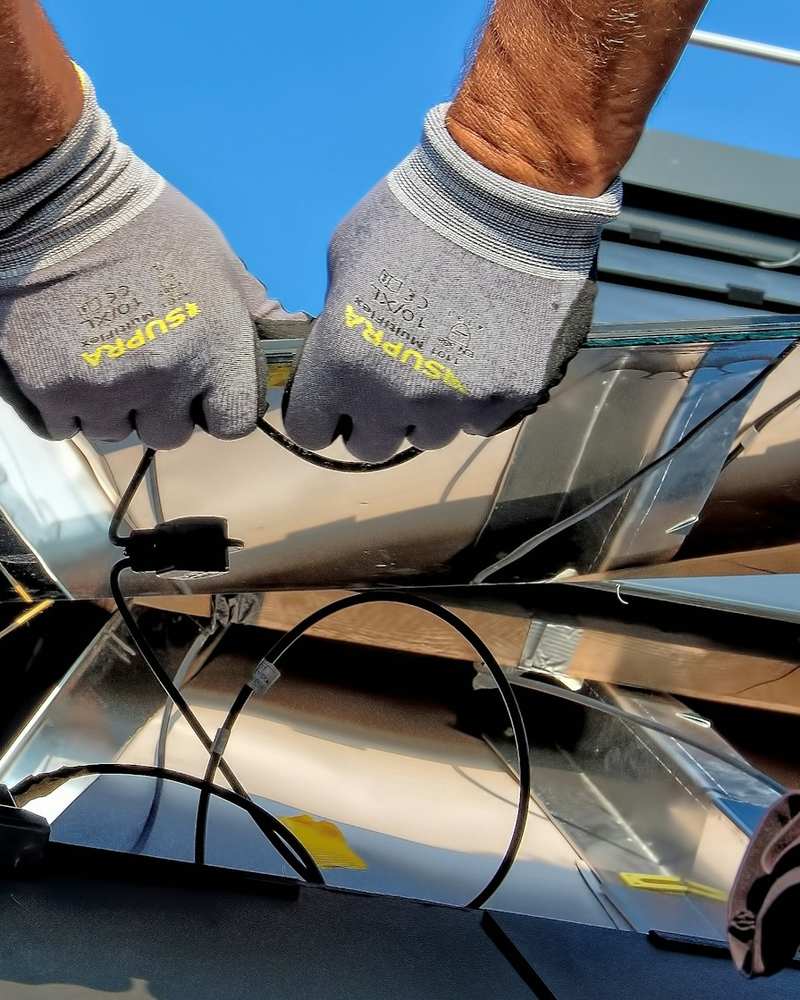
An installer in work gloves connecting the cables under a solar panel

What a maintenance visit covers

  • Cleaning. Soft brushes and purified water, which dries without marks. No detergents and no pressure washer: both can damage the anti-reflective coating and give a manufacturer grounds to refuse a warranty claim.
  • Panels and fixings. We look at every panel for cracks, discolouration and hot spots, and check that clamps, rails and roof anchors are tight and sealed.
  • Cables and connectors. Anything loose, chafed, sun-damaged or chewed is re-fixed or replaced.
  • Electrical tests. Voltage and current on each string, insulation resistance, earthing, and the protections in the solar board.
  • Inverter and battery. Error history, firmware, ventilation and dust filters.
  • Output check. We compare what the system has produced with what it should have, month by month, so a shortfall is spotted even when nothing is visibly wrong.

You get a short written report with photographs and anything that needs attention, priced before we do it.

How often

Once a year suits most roofs, ideally in late spring before the high-output months. Twice a year makes sense for flat arrays, which shed dirt poorly, and for homes close to the sea or to building work. After a heavy calima a quick wash pays for itself.

Repairs and fault-finding

An inverter showing an error code, a system that has gone quiet in the app, one roof face producing less than the other, a trip switch that keeps dropping out. We diagnose it on site, tell you what it will cost and deal with the manufacturer if the part is under warranty.

Systems we did not install

We take on systems fitted by other installers, including companies that are no longer trading. On a first visit we document what is there, test it and tell you what state it is in.

Panels that were never legalised

If your supplier is not crediting your surplus, the system was probably never registered. It usually can be: we check the installation against the regulations, issue the certificate, register it with the Junta de Andalucía and request surplus compensation.

Questions about looking after solar

All questions and answers

Do solar panels need cleaning here?

Yes. Marbella’s long dry summers and the Saharan dust that arrives several times a year leave a film that rain does not fully clear. A University of Málaga study measured an average loss of about 4% over a year, rising above 20% after long dry spells.

Once or twice a year is enough for most roofs, plus a wash after a heavy dust episode. We use soft brushes and purified water, without detergents or pressure washers, which can damage the coating and void the warranty. See maintenance.

How do I know the system is working?

Every system we fit comes with the inverter maker’s app, which shows what the panels are producing, what the house is using and what is going to or from the grid, minute by minute. We set it up on your phone at handover and show you what a normal day looks like, so that an abnormal one stands out.

Do panels work less well in the summer heat?

A little. Panels lose roughly 0.3% of their output for every degree their cells rise above 25°C, and on an August afternoon the cells can reach 60°C or more. The long days more than make up for it: July is still the best month of the year. Good airflow under the panels helps, which is one reason we do not mount them flush against the tiles.

What guarantees do I get?

From the manufacturers: typically 25 years on the panels themselves and 25 to 30 years on their output, 5 to 10 years on the inverter (extensions are available and often worth having), and 10 years on a battery. Our own guarantee covers the workmanship, and its term is written on your quote.

You receive the warranty certificates, the electrical certificate and the registration documents in one folder when the job is finished. Keep it with the deeds; a buyer’s lawyer will ask for it.

Book a clean or a check

Tell us how many panels you have and what kind of roof they are on. Cleaning is priced by the size of the array and how it is reached.

Get a free quote